



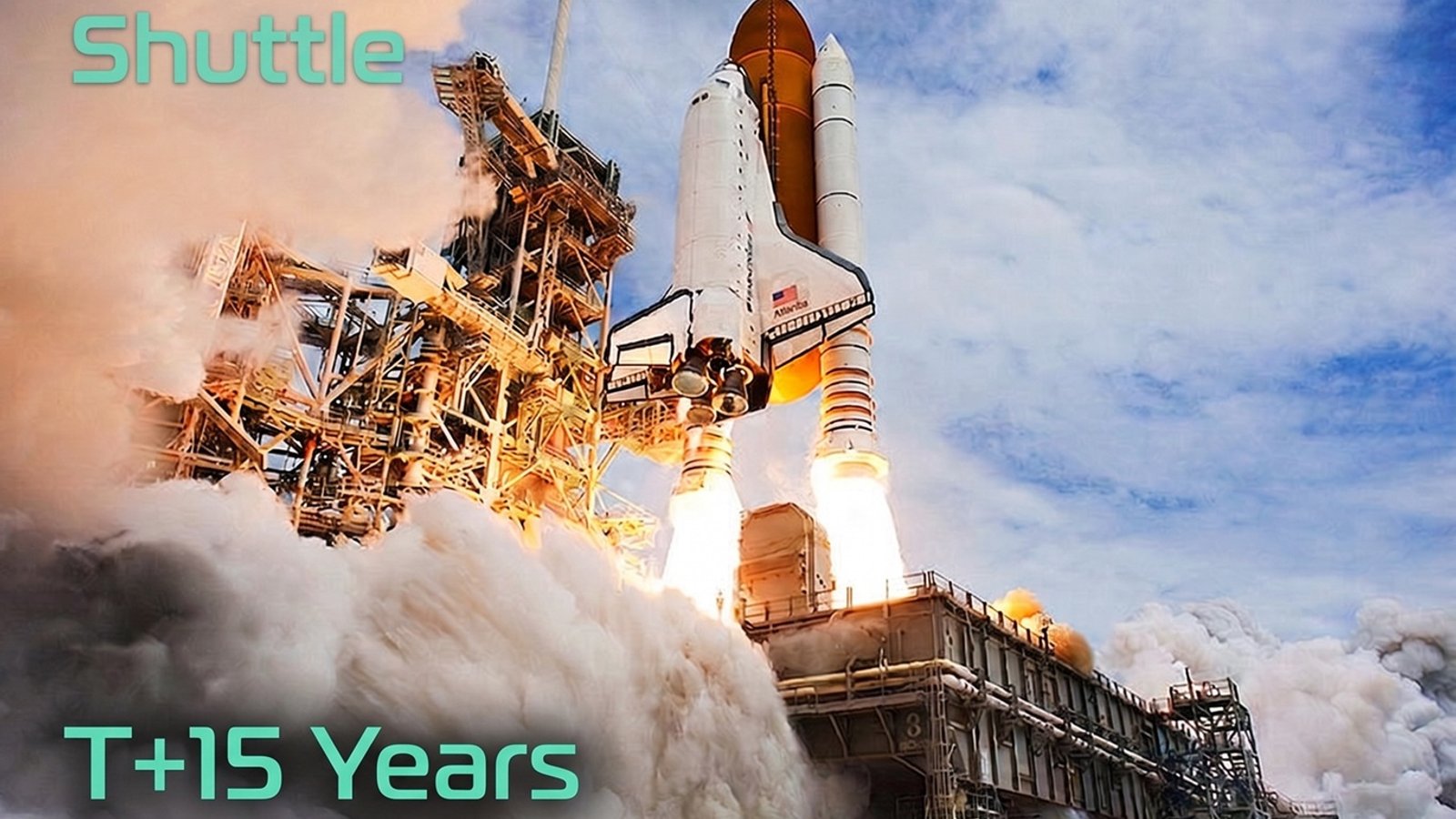

Fifteen years ago this week, on July 21, 2011, Space Shuttle Atlantis touched down for the final time at Kennedy Space Center, closing the book on a remarkable 30-year chapter in American spaceflight. As someone who had the profound honor of serving in so many unique roles in the Space Shuttle Program, I still feel the complex emotions of that day like it was yesterday.
There was tremendous pride in everything the program had accomplished across 135 flights—from creating the world’s first reusable spacecraft, capturing and repairing satellites in space, and deploying and servicing the Hubble Space Telescope, to assembling the International Space Station, conducting groundbreaking science, and providing the nation the extraordinary and unrivaled capabilities of a true space transportation system. There was deep gratitude for having lived a boyhood dream, working alongside some of the most talented and dedicated people I have ever known, and being part of an endeavor that pushed the boundaries of what humans could achieve.
End of an Era
And yes, there was also a quiet sadness. As I remember standing at the Shuttle Landing Facility that early morning, there was the unmistakable feeling that an era was ending, things were definitely changing, and that the familiar rhythm of shuttle processing, countdowns, and landings would no longer fill our lives in the same way they had for decades.
The proclamations of “Welcome Home, Atlantis,” and “Mission Accomplished” for the Space Shuttle Program were certainly well deserved. And on a personal note, so were the tears that formed in so many of our eyes that unforgettable day, as we realized this would indeed be the end of a very important chapter not only in our lives, but in the history of spaceflight.
Legacies and Lessons Learned
As we celebrate this 15th anniversary, I believe the most meaningful way to honor that history is not only to remember the pride and the people, but to carry forward the hard-won lessons. The Space Shuttle Program gave us both extraordinary successes and painful tragedies. From both, we learned.
Here are ten of the most important lessons I believe still matter deeply today.
- Maintain a Preoccupation with Preventing Failure High-reliability organizations never grow complacent. The Space Shuttle taught us that anomalies and deviance must never become “normal.” What we accept today as routine can become the seed of tomorrow’s tragedy if we stop asking why it happened and what it really means.
- Make Safety a Non-Negotiable Core Value Schedule pressure, budget constraints, and the desire to keep flying are powerful forces. The Shuttle program showed us what happens when those forces subtly erode safety margins. True leadership protects the line between acceptable risk and unacceptable risk, even when it is difficult or unpopular.
- Create Psychological Safety So People Can Speak Up After both Challenger and Columbia, we learned that engineers and operators must feel safe to raise concerns without fear of career consequences. A healthy culture poised atop the pillars of encouraging and respecting dissenting and unpopular opinions must be the bedrock upon which an organization is built. Open and honest communication must be encouraged at every step. Simply put, “bad news” must travel as fast as “good news.”
- Strengthen Independent Voices and Checks on Power Program management and independent technical authorities/safety organizations must have balanced authority. When one side dominates, blind spots grow. The Shuttle experience reinforced the necessity of empowered, independent engineering and safety voices that can challenge assumptions and decisions.
- Institutionalize Lessons Learned So Knowledge Survives People Programs like the Apollo, Challenger, Columbia Lessons Learned Program exist because individual memory fades and organizations forget. Capturing hard-learned lessons, documenting decisions, and actively applying that knowledge across generations is not bureaucracy—it is how we honor the sacrifice and hard work of those who came before us.
- Understand Complex System Interactions The Space Shuttle was one of the most complex machines ever flown. Small changes or known issues in one area (such as external tank foam) could have outsized, catastrophic effects on other systems (thermal protection tiles). We must always think in terms of the whole system, not just our piece of it. When that system is talking to us, we must listen.
- Invest Relentlessly in Training, Simulation, and Teamwork Many of the Shuttle’s greatest successes—including multiple Hubble servicing missions, the intricate assembly of the ISS, and countless in-flight problem-solving moments—were possible because of extraordinary preparation and the seamless integration of crew and ground teams. Excellence in human factors and training is an invaluable force multiplier for both safety and success.
- Question Conventional Wisdom and Never Stop Imagining What Could Go Wrong “We’ve always done it this way” and “it worked last time” are dangerous phrases in high-consequence organizations. The Shuttle program repeatedly showed us the value of questioning assumptions and using our imagination to envision failure modes before they occur. That Failure of Imagination, a hard-learned lesson from Apollo 1, should be guarded against at every turn to widen the lens through which we view operations and strategy.
- Analyze Successes with the Same Rigor as Failures We rightly conduct thorough investigations after mishaps. We must also study why things went right, closely examining what conditions, decisions, and behaviors enabled success so we can replicate them deliberately rather than by accident. This practice, along with the vigilance with which it is carried out, must be ingrained and nourished deep within organizational culture.
- The Greatest Legacy Lives in the People and the Example They Set Beyond the hardware and the missions, the Shuttle program demonstrated what thousands of dedicated individuals across NASA, its contractors, and international partners can accomplish when united by a shared purpose. That example of resilience, collaboration, unity, and pursuit of the unknown remains one of our most valuable exports to the world.
With Humble Gratitude
To the crews who flew, especially those we lost on Challenger and Columbia; to the thousands of engineers, technicians, controllers, contractors, and support personnel who made every mission possible; and to the families who stood beside them… Thank You! Your courage, skill, and sacrifice continue to light the path forward. May we prove worthy of that legacy by applying these lessons with humility, vigilance, and an unwavering commitment to doing the next mission safer and better than the last.
The Path Ahead
Fifteen years later, I remain deeply humbled and grateful to continue sharing these lessons drawn from both the triumphs and the tragedies of the Space Shuttle era, and from the broader nearly 70-year history of NASA. These insights belong to all teams, organizations, emerging leaders, and anyone willing to listen to increase their own chances of mission success. Spaceflight is unforgiving, but it also reveals the very best of human character when we choose to learn from it.
Join the Conversation
What lessons from the iconic Space Shuttle era resonate most with you as you look across your organizations today and in the days to come? I’d welcome your thoughts in the comments below.